
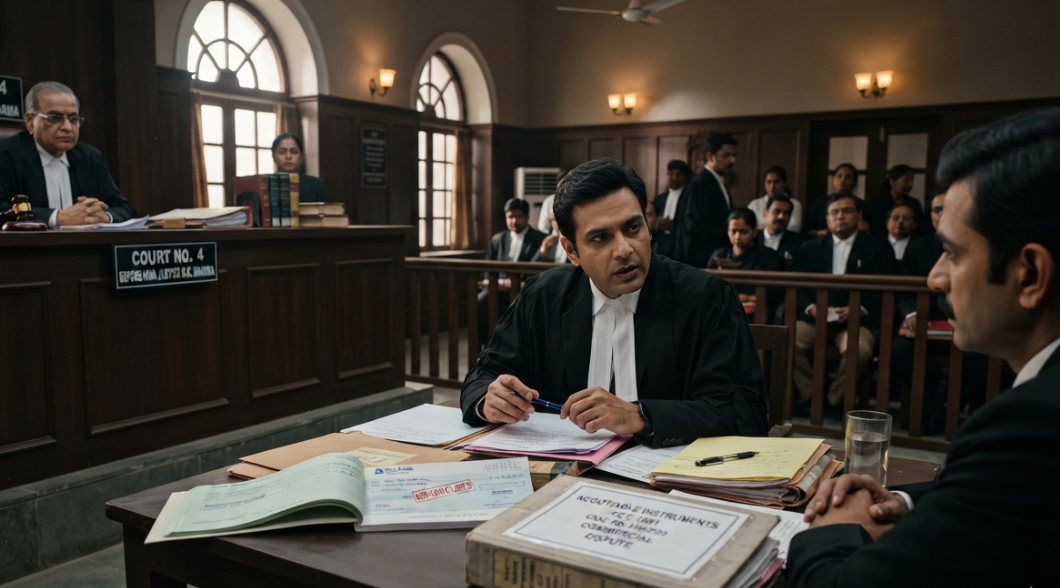
Cheque bounce cases continue to be a significant area of commercial and criminal litigation in India. The primary legal provision governing cheque dishonour is Section 138 of the Negotiable Instruments Act, 1881 (NI Act). The provision seeks to protect the credibility of cheques used in financial transactions and provides a legal remedy where a cheque issued towards a legally enforceable debt or liability is dishonoured, subject to fulfilment of the statutory requirements.
Over the years, Indian courts have delivered several important judgments explaining the circumstances in which a person may be held liable for cheque dishonour, the importance of a legally enforceable debt, the treatment of security cheques, and the procedural requirements for initiating proceedings.
Recent decisions in 2026 continue to demonstrate that the outcome of a cheque-bounce case depends heavily on the facts and evidence presented before the court. The following five recent judgments highlight some important legal principles relevant to Section 138 proceedings.
1. Vikas Thawani v. Anil David

Judgment Date: 12 May 2026
In Vikas Thawani v. Anil David, the court considered a complaint under Section 138 of the Negotiable Instruments Act. The court ultimately acquitted the accused after finding that the complainant had failed to discharge the initial burden of establishing the essential ingredients necessary to constitute an offence under Section 138.
The judgment is significant because it reinforces the principle that a cheque dishonour complaint cannot succeed merely because a cheque has been presented and returned unpaid. The complainant must establish the necessary statutory ingredients, including the existence of a legally enforceable debt or liability and compliance with the mandatory requirements prescribed under the NI Act.
The court found that the accused had been able to raise a probable defence in the circumstances of the case. As a result, the accused was acquitted of the offence under Section 138.
Key Legal Takeaway
The decision highlights the importance of proving the underlying transaction and legally enforceable liability. Although the law provides presumptions in favour of the holder of a cheque in appropriate circumstances, those presumptions do not eliminate the requirement to establish the foundational facts of the case. The accused can rebut the statutory presumption by raising a probable defence based on the evidence available before the court.
This judgment therefore serves as a reminder that parties involved in financial transactions should maintain proper documentation, including agreements, invoices, payment records, correspondence and other evidence demonstrating the underlying debt or liability.
2. Judgment concerning Dishonour of a Security Cheque and an "Account Blocked" Endorsement
Judgment Date: 1 January 2026
A recent Himachal Pradesh High Court judgment dealt with the dishonour of a cheque issued in connection with a financial transaction, where the cheque was described as a security cheque and the bank return endorsement referred to the account being “blocked.”
The accused argued that the cheque had been issued merely as security and therefore should not attract Section 138 of the NI Act. The court rejected this argument in the facts of the case and upheld the conviction.
The court relied upon established principles that a security cheque may attract Section 138 where, at the time of presentation, it represents an existing and legally enforceable debt or liability. The mere description of a cheque as a “security cheque” does not automatically take it outside the scope of Section 138.
The judgment also considered the effect of an “account blocked” endorsement. The court held that, where the circumstances establish that the cheque represented a legally enforceable liability and the statutory requirements are satisfied, the drawer cannot automatically avoid liability merely because the bank’s return memo states that the account was blocked.
Key Legal Takeaway
The important principle emerging from this decision is that the label attached to a cheque is not necessarily decisive. A security cheque can become enforceable when the underlying liability has matured and remains unpaid. However, the specific facts and nature of the transaction must always be examined.
The decision also highlights the importance of examining the reason for dishonour along with the underlying transaction. A drawer cannot necessarily escape Section 138 liability simply by relying on the terminology used in a bank return memo when the evidence otherwise establishes the existence of a legally enforceable liability.
3. M/S ND Developers Private Ltd v. Ritesh Raushan
Judgment Date: 4 March 2026
In M/S ND Developers Private Ltd v. Ritesh Raushan, the court emphasised an important aspect of Section 138 proceedings: every instance of cheque dishonour does not automatically constitute an offence under Section 138 of the Negotiable Instruments Act.
Section 138 applies when the statutory conditions prescribed by the law are fulfilled. The dishonour must fall within the circumstances contemplated by the provision, and the cheque must have been issued in connection with a legally enforceable debt or liability. The complainant must also comply with the statutory procedure concerning presentation of the cheque and issuance of the demand notice.
This judgment reinforces the distinction between a simple banking transaction involving a dishonoured cheque and a legally maintainable prosecution under Section 138.
Key Legal Takeaway
The decision demonstrates that a cheque bounce case must be assessed against all the statutory requirements of Section 138. The mere fact that a cheque was dishonoured is not, by itself, sufficient to establish criminal liability.
For a successful complaint, the complainant must carefully establish the underlying legally enforceable liability and demonstrate compliance with the applicable statutory procedure. This makes proper documentation and timely legal action particularly important in cheque dishonour matters.
4. Ananda Kumar v. Rakesh Pujari
Judgment Date: 6 May 2026
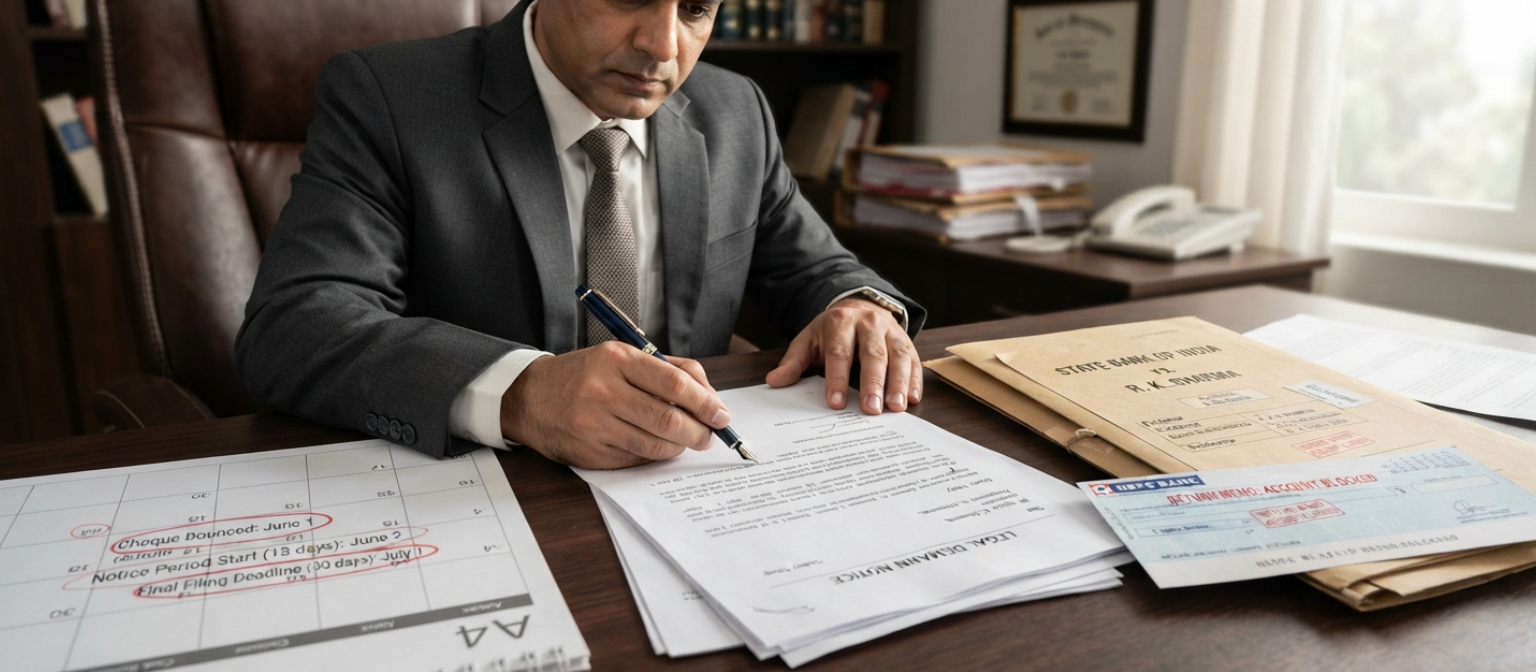
In Ananda Kumar v. Rakesh Pujari, the court considered the statutory timelines associated with a cheque-bounce complaint.
The judgment discussed the requirement under Section 138 that a cheque must be presented within the prescribed period of its validity. It also considered the statutory requirement concerning issuance of a written demand notice after receiving information from the bank regarding dishonour.
In the case, the cheque was presented within the prescribed period. The complainant subsequently issued the legal notice within the required statutory period after receiving information regarding dishonour. The court also considered the statutory opportunity provided to the drawer to make payment after receipt of the demand notice.
Key Legal Takeaway
This judgment highlights the importance of strict compliance with statutory timelines in cheque bounce litigation. A complainant should carefully monitor the date on which the bank communicates the dishonour of the cheque, the deadline for issuing the demand notice, the service of the notice and the subsequent period available to the drawer for making payment.
Failure to comply with the prescribed procedure may adversely affect the maintainability of proceedings under Section 138.
Therefore, a person seeking to initiate a cheque bounce case should obtain the bank return memo and promptly consult a qualified legal professional to ensure that the statutory steps are followed within the prescribed timelines.
5. Amarjeet Singh v. Surinder Kumar Tangri
Judgment Date: 27 March 2026
In Amarjeet Singh v. Surinder Kumar Tangri, the proceedings involved a dispute concerning the existence of a legally enforceable debt or liability underlying the cheque.
The case illustrates one of the central issues that frequently arises in Section 138 litigation: whether the cheque was actually issued towards a legally enforceable debt or liability. Where the accused successfully raises a probable defence that challenges the existence or enforceability of the underlying liability, the court is required to examine the evidence carefully.
The judgment is particularly relevant because cheque bounce litigation often involves competing claims regarding loans, business transactions, advances, repayments or other financial arrangements. The existence of a cheque alone may not resolve every dispute concerning the underlying transaction.
Key Legal Takeaway
The case demonstrates the importance of proving the financial transaction that forms the basis of the cheque. Parties should preserve supporting evidence such as loan agreements, account statements, invoices, receipts, acknowledgements, correspondence and payment records.
Where a complainant cannot establish the legally enforceable nature of the liability, or where the accused is able to raise a credible and probable defence, the prosecution under Section 138 may face difficulties.
The decision therefore reinforces the broader principle that cheque bounce proceedings are closely connected with the underlying financial transaction and the evidence supporting it.
Importance of Recent Cheque Bounce Case Laws
Judgment Date: 27 March 2026
The recent decisions discussed above demonstrate several important principles relevant to cheque dishonour litigation in India.
First, a dishonoured cheque does not automatically result in conviction. The statutory requirements under Section 138 must be satisfied and the complainant must establish the necessary foundational facts.
Second, the existence of a legally enforceable debt or liability remains central to a Section 138 prosecution. Courts may examine the nature of the underlying transaction and the evidence produced by both parties.
Third, security cheques may attract Section 138 when they represent a debt or liability that has become due and legally enforceable. However, the circumstances surrounding the issuance and presentation of the cheque remain important.
Fourth, statutory timelines are critical. The cheque must be presented within the applicable period, the demand notice must be issued within the prescribed time after information about dishonour, and the drawer must be given the statutory opportunity to make payment.
Finally, documentary evidence can play a crucial role. Parties involved in financial transactions should maintain proper records to establish the nature of the transaction, the amount due and the circumstances in which the cheque was issued.
Recent case laws on cheque bounce demonstrate that courts continue to examine Section 138 proceedings by focusing on the statutory requirements, the existence of legally enforceable liability, the nature of security cheques, the reason for dishonour and compliance with prescribed procedures.
For businesses, lenders, individuals and other parties involved in financial transactions, understanding these legal principles can help in taking timely and appropriate action when a cheque is dishonoured. Since the outcome of each matter depends on its facts, evidence and applicable law, professional legal advice should be obtained before initiating or defending proceedings under the Negotiable Instruments Act.