
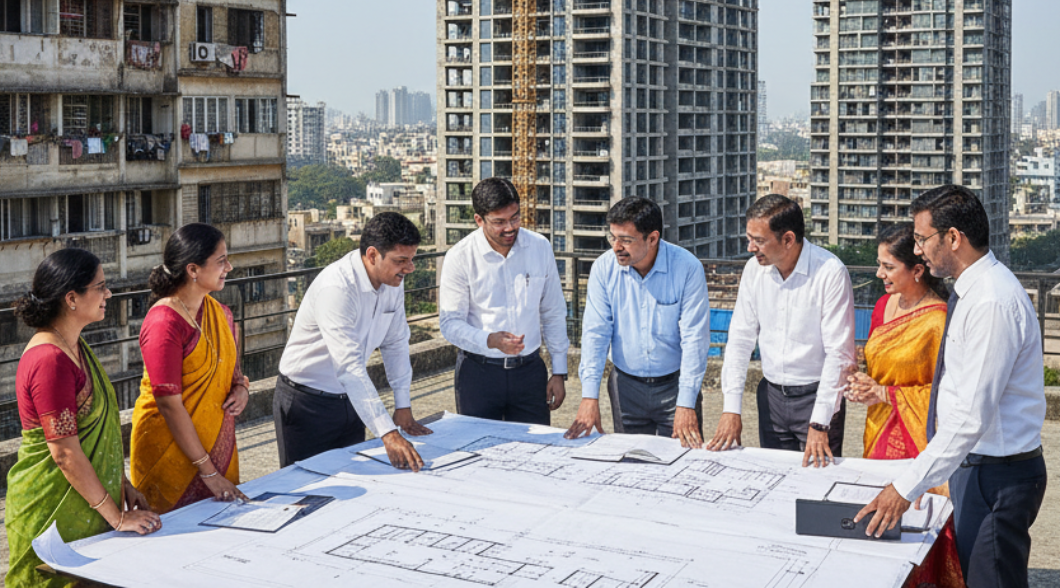
The redevelopment of housing societies has become a significant aspect of urban development, especially in metropolitan cities such as Mumbai, where many residential buildings have aged considerably and require structural upgrades. Redevelopment offers an opportunity for housing societies to replace old and deteriorating buildings with modern structures equipped with enhanced amenities, better safety standards, and improved living conditions.
For cooperative housing societies, redevelopment is often viewed as a practical solution to overcome issues related to structural instability, limited facilities, and increasing maintenance costs. However, the process involves various legal, financial, and procedural considerations that must be carefully managed to safeguard the interests of all stakeholders.
Meaning of Redevelopment of a Society
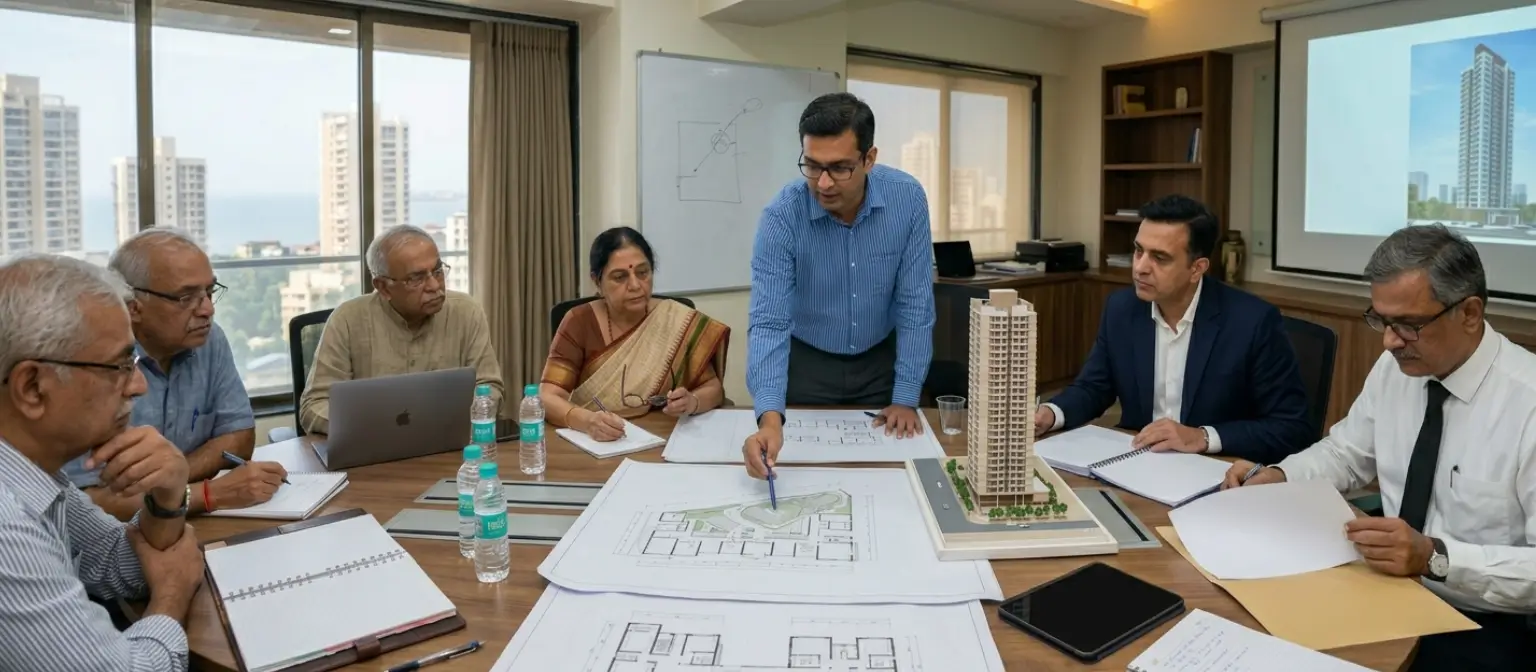
Redevelopment refers to the process of demolishing an existing building or housing society structure and reconstructing a new building on the same plot of land. This process is generally undertaken when the existing structure has become old, unsafe, economically unviable to repair, or incapable of meeting the growing needs of residents.
In a redevelopment project, a developer is typically appointed by the society to undertake construction activities. In return, the developer may receive additional development rights, saleable area, or other benefits as permitted under applicable laws and development regulations.
The primary objective of redevelopment is to provide society members with larger, safer, and more modern residential premises while optimizing the utilization of available land.
Importance of Redevelopment
Redevelopment plays a crucial role in enhancing urban infrastructure and improving the quality of life of residents.
1. Structural Safety
Many housing societies are more than 30 to 40 years old and suffer from severe structural deterioration. Redevelopment helps eliminate safety risks associated with aging buildings.
2. Better Living Standards
Newly redeveloped buildings offer modern amenities such as elevators, parking facilities, security systems, fire safety mechanisms, clubhouses, gyms, and landscaped areas.
3. Optimal Land Utilization
Redevelopment allows better utilization of land by taking advantage of revised Floor Space Index (FSI), Transferable Development Rights (TDR), and other development incentives.
4. Increased Property Value
Redeveloped properties generally command higher market value due to modern construction, superior facilities, and enhanced aesthetics.
5. Compliance with Current Regulations
New constructions are built according to current building codes, environmental standards, and fire safety regulations, ensuring legal compliance and safety.
Relevant Legal Sections Governing Redevelopment
The redevelopment of cooperative housing societies is governed by several legal provisions and regulatory guidelines.
1. Maharashtra Cooperative Societies Act, 1960
The Act provides the framework for the functioning and management of cooperative housing societies. Redevelopment decisions are generally undertaken through resolutions passed by society members in accordance with the Act and society bye-laws.
2. Maharashtra Cooperative Societies Rules, 1961
These rules prescribe procedural requirements relating to meetings, resolutions, voting, and decision-making processes concerning redevelopment projects.
3. Model Bye-Laws of Cooperative Housing Societies
The Model Bye-Laws provide guidelines regarding:
- Calling special general body meetings.
- Appointment of project management consultants.
- Selection of developers.
- Approval procedures.
- Execution of development agreements.
4. Government Resolution (GR) on Redevelopment
The Government of Maharashtra has issued various circulars and guidelines regulating the redevelopment process of cooperative housing societies. These guidelines aim to ensure transparency, fairness, and protection of members’ interests.
5. Real Estate (Regulation and Development) Act, 2016 (RERA)
Where applicable, redevelopment projects must comply with RERA provisions concerning registration, disclosures, timelines, and protection of homebuyers and society members.
6. Development Control and Promotion Regulations (DCPR)
Redevelopment projects must adhere to local development control regulations governing FSI, building height, setbacks, parking requirements, and permissible construction activities.
Advantages of Society Redevelopment
Redevelopment offers numerous benefits to society members and urban communities.
1. Larger Residential Units
Members often receive additional carpet area in the redeveloped building without significant financial contribution.
2. Modern Amenities
Residents gain access to contemporary facilities such as:
- Gymnasiums
- Clubhouses
- Children's play areas
- CCTV surveillance
- Fire-fighting systems
- Modern lifts
3. Improved Safety
New structures are designed according to modern engineering standards, making them safer and more durable.
4. Financial Benefits
Many redevelopment agreements include:
- Corpus funds
- Rent compensation during transit accommodation
- Shifting charges
- Maintenance support
5. Enhanced Property Value
The market value of flats generally increases substantially after redevelopment due to improved infrastructure and amenities.
6. Better Infrastructure
Redevelopment often results in upgraded common areas, parking facilities, drainage systems, electrical installations, and water supply arrangements.
Disadvantages of Society Redevelopment
While redevelopment offers substantial benefits, certain challenges and risks must also be considered.
1. Temporary Relocation
Members are required to vacate their premises during the construction period, causing inconvenience and adjustment issues.
2. Project Delays
Construction delays can occur due to regulatory approvals, financial difficulties, legal disputes, or unforeseen circumstances.
3. Disputes Among Members
Differences in opinion among society members regarding developer selection, project terms, and compensation packages may create conflicts.
4. Developer Risks
Financial instability or non-performance by the developer can adversely affect project completion.
5. Legal Complexities
Redevelopment involves multiple legal documents, approvals, agreements, and compliance requirements that require professional guidance.
6. Cost Escalation
Unexpected increases in construction costs may affect project viability and timelines.
Uses of Redevelopment

Redevelopment serves various practical and economic purposes.
1. Replacement of Dilapidated Structures
Buildings that have become unsafe or structurally weak can be replaced with modern and secure constructions.
2. Urban Renewal
Redevelopment contributes to city modernization and infrastructure enhancement.
3. Improved Utilization of Development Rights
Societies can capitalize on available FSI and TDR benefits to maximize land potential.
4. Sustainable Development
Modern buildings incorporate environmentally friendly technologies, energy-efficient systems, and sustainable construction practices.
5. Economic Growth
Redevelopment generates employment opportunities, boosts real estate activity, and contributes to local economic development.
6. Better Community Facilities
New developments often provide improved recreational, social, and community spaces for residents.
Important Case Laws on Redevelopment
1. Daman Singh v. State of Punjab (1985)
The Supreme Court recognized the collective nature of cooperative societies and held that individual members are bound by decisions validly taken by the society in accordance with applicable laws and bye-laws.
2. Girish Mulchand Mehta & Anr. v. Mahesh S. Mehta & Anr. (2010)
The Bombay High Court emphasized that redevelopment decisions approved by the requisite majority of society members are generally binding on dissenting members, provided the process is lawful and transparent.
3. Mazda Construction Company v. Sultanabad Darshan CHS Ltd.
The court highlighted the importance of following proper procedures in redevelopment projects and protecting the rights of society members throughout the redevelopment process.
4. Nahalchand Laloochand Pvt. Ltd. v. Panchali Cooperative Housing Society Ltd. (2010)
The Supreme Court clarified important principles relating to ownership rights and common facilities within housing societies, which have significant implications for redevelopment projects.
Redevelopment of a housing society is an effective mechanism for transforming old and deteriorating buildings into modern, safe, and valuable residential complexes. It provides numerous benefits, including enhanced safety, improved amenities, larger living spaces, and increased property values. However, redevelopment also involves legal, financial, and practical challenges that require careful planning and professional assistance.
Housing societies considering redevelopment should ensure compliance with applicable laws, conduct transparent decision-making processes, appoint qualified consultants, and thoroughly evaluate developers before entering into redevelopment agreements. Proper legal guidance can help safeguard members’ interests and facilitate a smooth and successful redevelopment process.