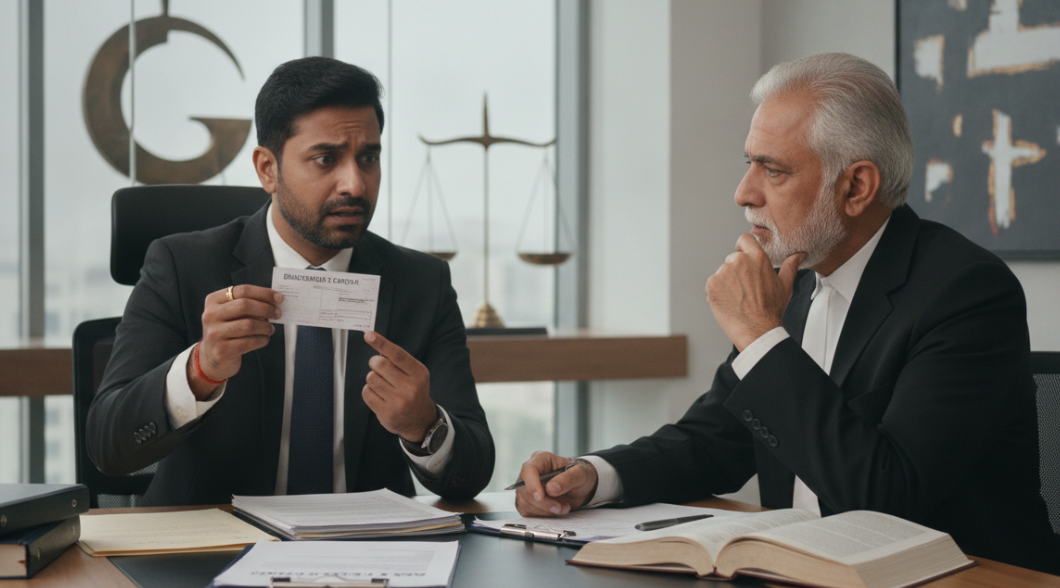
In business and personal financial transactions, cheques continue to be a widely accepted mode of payment despite the rise of digital payment methods. A cheque represents trust between the issuer and the recipient. However, when a cheque is returned unpaid due to insufficient funds or other valid reasons, it can lead to significant financial losses and legal complications.
To protect the rights of the payee and ensure financial discipline, Section 138 of the Negotiable Instruments Act, 1881 provides a legal remedy against cheque dishonour. This provision has become one of the most frequently invoked sections in commercial litigation across India.
This article explains the importance of Section 138 of the Negotiable Instruments Act, its advantages and disadvantages, and discusses some landmark judicial decisions that have shaped the law relating to cheque bounce cases.
- Insufficient funds in the account
- Account closed
- Payment stopped by the drawer
- Signature mismatch
- Exceeds arrangement with the bank
- Frozen bank account
Not every cheque dishonour results in criminal liability. Criminal proceedings under Section 138 apply only when the statutory requirements prescribed under the law are fulfilled.
Understanding Section 138 of the Negotiable Instruments Act

Section 138 of the Negotiable Instruments Act, 1881 makes the dishonour of a cheque for insufficiency of funds a criminal offence, provided certain legal conditions are met.
The provision aims to promote the credibility of negotiable instruments and ensure that individuals and businesses honour their financial commitments.
A person issuing a cheque may face criminal prosecution if:
- The cheque was issued to discharge a legally enforceable debt or liability.
- The cheque was presented within its validity period.
- The cheque was returned unpaid by the bank.
- A legal demand notice is issued within the prescribed time after receiving information regarding dishonour.
- The drawer fails to make payment within 15 days of receiving the legal notice.
If these conditions are satisfied, the payee can file a complaint before the appropriate court.
Importance of Section 138 of the Negotiable Instruments Act
Section 138 has transformed commercial transactions in India by creating accountability for cheque issuers.
1. Promotes Financial Discipline
The provision discourages individuals and businesses from issuing cheques without maintaining sufficient funds.
2. Enhances Business Confidence
Commercial transactions rely heavily on trust. Section 138 assures businesses that legal remedies are available if payments are dishonoured.
3. Protects Creditors
Creditors often accept cheques as deferred payment. The law safeguards their interests by providing both criminal and civil remedies.
4. Reduces Fraudulent Practices
The possibility of criminal prosecution discourages intentional issuance of dishonoured cheques.
5. Encourages Timely Settlement
Many cheque bounce disputes are resolved immediately after receiving the statutory legal notice, avoiding prolonged litigation.
6. Supports Commercial Growth
Reliable payment mechanisms contribute to smoother business operations and strengthen commercial relationships.
Procedure for Filing a Cheque Bounce Case
1. Present the cheque within its validity period.
2. Receive the cheque return memo from the bank.
3. Send a statutory legal notice to the drawer within the prescribed limitation period.
4. Wait for 15 days from receipt of the notice.
5. If payment is not made, file a complaint before the competent Magistrate within the statutory limitation period.
6. The court examines the complaint and proceeds with the trial if a prima facie case exists.
Proper documentation and adherence to statutory timelines are crucial for maintaining a successful complaint under Section 138.
Advantages of Section 138 Proceedings

Strong Legal Protection
The law provides an effective mechanism for recovering money when cheques are dishonoured due to insufficient funds.
Criminal Liability Acts as a Deterrent
Since dishonour can result in criminal prosecution, many drawers prefer settling disputes before trial.
Encourages Out-of-Court Settlement
A significant number of cheque bounce matters are resolved through negotiation, mediation, or compromise.
Faster Compared to Ordinary Civil Recovery
Although delays may occur, Section 138 proceedings generally offer greater leverage than initiating only a civil recovery suit.
Improves Commercial Credibility
Businesses become more cautious while issuing cheques, leading to greater financial discipline in commercial transactions.
Multiple Legal Remedies
The complainant may simultaneously pursue other legal remedies where applicable, depending on the facts of the case.
Disadvantages of Section 138 Proceedings
While the law is beneficial, it is not without limitations.
Court Delays
Cheque bounce cases constitute a substantial portion of pending criminal cases, which may result in prolonged litigation.
Technical Compliance
Failure to comply with statutory timelines for issuing notices or filing complaints may render the complaint invalid.
Burden of Documentation
Proper records, including the original cheque, bank memo, legal notice, postal proof, and related documents, are essential.
Limited Scope
Section 138 applies only to cheques issued against legally enforceable debts or liabilities. It does not cover gifts, donations, or certain contingent obligations.
Criminal Proceedings Can Be Lengthy
Despite summary trial provisions, contested matters may continue for several years depending on court workload.
Important Case Laws on Cheque Bounce
Indian courts have consistently interpreted Section 138 to balance the rights of both the complainant and the accused.
Modi Cements Ltd. v. Kuchil Kumar Nandi (1998)
The Supreme Court held that even if the drawer instructs the bank to stop payment after issuing the cheque, prosecution under Section 138 may still be maintainable if other legal requirements are fulfilled.
Significance:
Stopping payment does not automatically absolve the drawer from criminal liability.
Rangappa v. Sri Mohan (2010)
This landmark judgment clarified that once the execution of the cheque is admitted, there is a statutory presumption that the cheque was issued towards a legally enforceable debt or liability.
Significance:
The burden shifts to the accused to rebut the statutory presumption.
Dashrath Rupsingh Rathod v. State of Maharashtra (2014)
The Supreme Court initially held that jurisdiction lies where the drawee bank is situated.
Although this position was later modified by legislative amendment, the case remains significant in understanding the evolution of territorial jurisdiction under cheque bounce law.
Bridgestone India Pvt. Ltd. v. Inderpal Singh (2016)
The Supreme Court clarified that after legislative amendments, jurisdiction lies where the payee’s bank presents the cheque for collection.
Significance:
This decision simplified jurisdictional issues and reduced inconvenience for complainants.
Meters and Instruments Private Limited v. Kanchan Mehta (2018)
The Supreme Court encouraged courts to adopt a pragmatic approach in cheque bounce cases and promote early settlements.
Significance:
The judgment emphasised speedy disposal and compounding of offences wherever appropriate.
Penalties Under Section 138
If found guilty, the accused may face:
- Imprisonment for up to two years.
- Fine which may extend to twice the amount of the cheque.
- Both imprisonment and fine, depending upon the facts of the case.
Courts may also direct compensation to the complainant under applicable legal provisions.
Tips to Avoid Cheque Bounce Disputes
Both businesses and individuals can reduce legal disputes by adopting good financial practices:
- Maintain sufficient account balance before issuing cheques.
- Verify cheque details carefully.
- Avoid issuing blank signed cheques.
- Keep proper financial records.
- Respond promptly to legal notices.
- Attempt settlement wherever commercially feasible.
Why Professional Legal Assistance Matters
Cheque bounce litigation involves strict procedural requirements and statutory deadlines. A minor procedural error can weaken an otherwise valid claim. Whether you are a complainant seeking recovery or an accused defending a cheque bounce complaint, experienced legal guidance helps protect your rights and ensures compliance with the law.
Professional legal assistance can help with:
- Drafting statutory legal notices
- Filing complaints under Section 138
- Court representation
- Negotiation and settlement
- Defence against false or disputed claims
- Execution of court orders and recovery proceedings
Timely legal advice can significantly improve the chances of achieving an effective resolution while avoiding unnecessary procedural complications.