
WhatsApp has become an important mode of communication for individuals, businesses and organisations in India. From business negotiations and payment confirmations to employment discussions and personal communications, many important conversations now take place through messaging applications. This naturally raises an important legal question: Can WhatsApp chats be used as evidence in an Indian court?
The short answer is yes, WhatsApp chats can be admissible as evidence in India, but merely producing screenshots or forwarding a conversation does not automatically make the material legally reliable. Courts may examine how the electronic record was created, preserved, produced and authenticated.
Since 1 July 2024, electronic evidence is primarily governed by the Bharatiya Sakshya Adhiniyam, 2023 (BSA), which replaced the Indian Evidence Act, 1872. The BSA expressly recognises electronic and digital records and gives them legal effect subject to the requirements applicable to electronic evidence.
Are WhatsApp Chats Legally Recognised as Evidence in India?
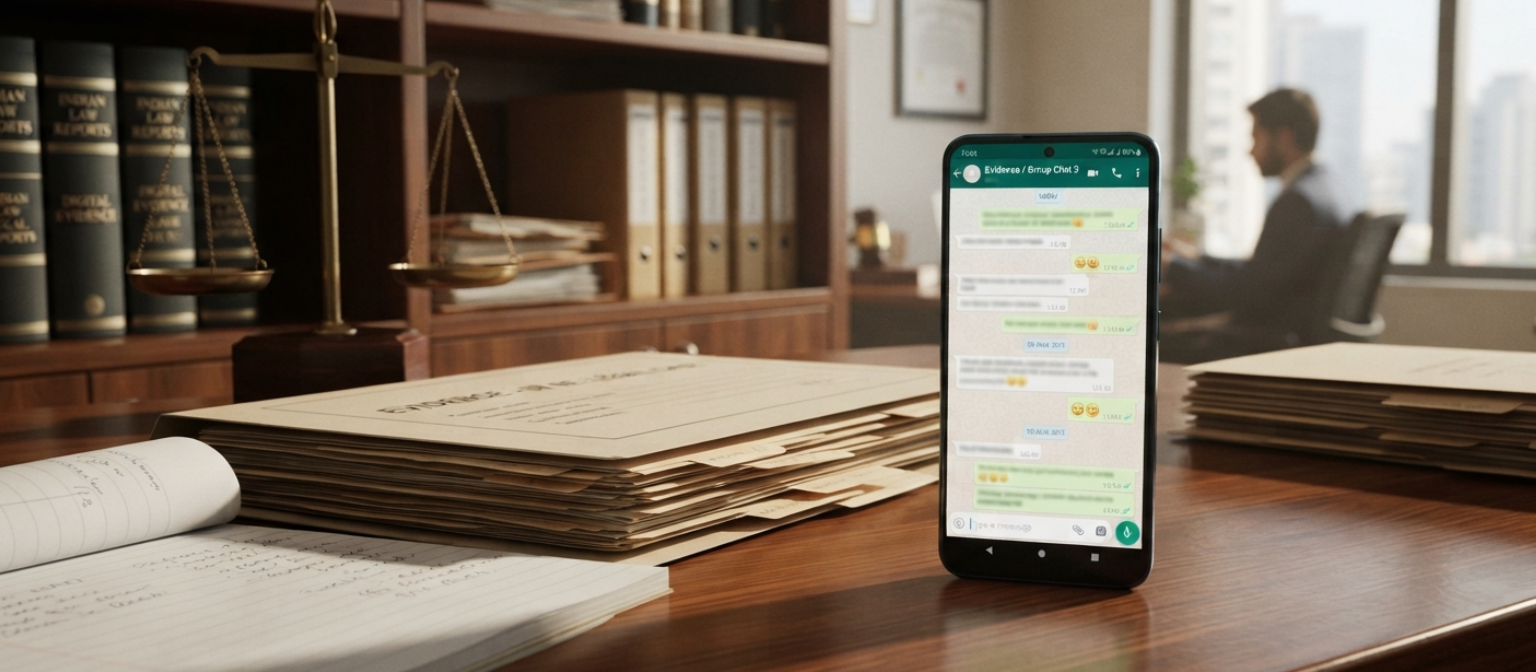
Yes. WhatsApp messages are a form of electronic or digital record. Under Section 61 of the Bharatiya Sakshya Adhiniyam, an electronic or digital record cannot be rejected merely because it is electronic or digital. Subject to the applicable requirements, it can have the same legal effect, validity and enforceability as other documents.
This means a WhatsApp conversation may potentially be relevant in matters such as:
- Commercial and contractual disputes
- Payment and debt-related disputes
- Employment matters
- Family and matrimonial proceedings
- Consumer disputes
- Property and business disagreements
- Criminal proceedings
- Disputes involving admissions, instructions or representations
However, relevance and admissibility are not the same as automatically proving the truth of everything contained in a chat. The court can consider authenticity, context, authorship, completeness and other surrounding circumstances.
What Does the Bharatiya Sakshya Adhiniyam Say About WhatsApp Evidence?
Sections 61 to 63 of the BSA are particularly relevant to electronic evidence.
Section 61 recognises electronic and digital records as having legal effect, while Section 62 states that the contents of electronic records may be proved in accordance with Section 63. Section 63 deals specifically with the admissibility of electronic records.
Under Section 63, certain computer outputs can be treated as documents if the prescribed conditions are satisfied. These conditions address matters such as regular use of the relevant computer or communication device, regular feeding of information into the system, proper operation of the device and the manner in which the information was reproduced.
The section also provides for a certificate accompanying the electronic record when evidence is sought to be admitted under that provision. The certificate is intended to identify the electronic record, describe how it was produced and provide relevant particulars concerning the device and applicable conditions.
Is a WhatsApp Screenshot Enough?
A screenshot can be useful, but a screenshot by itself may not always be sufficient to establish the authenticity of a WhatsApp conversation.
A screenshot can potentially be edited, cropped, selectively presented or taken out of context. Consequently, a court may be interested in the underlying electronic record and the circumstances in which it was obtained and preserved.
For example, a party relying on a WhatsApp conversation may need to establish:
1. Who sent or received the messages.
2. Which device or account contained the conversation.
3. That the conversation has not been materially altered.
4. When and how the electronic record was obtained.
5. Whether the relevant statutory requirements for electronic evidence have been satisfied.
6. Whether the conversation is complete and presented in its proper context.
The precise evidentiary requirements can depend on the facts and manner in which the record is produced.
What About the Electronic Evidence Certificate?
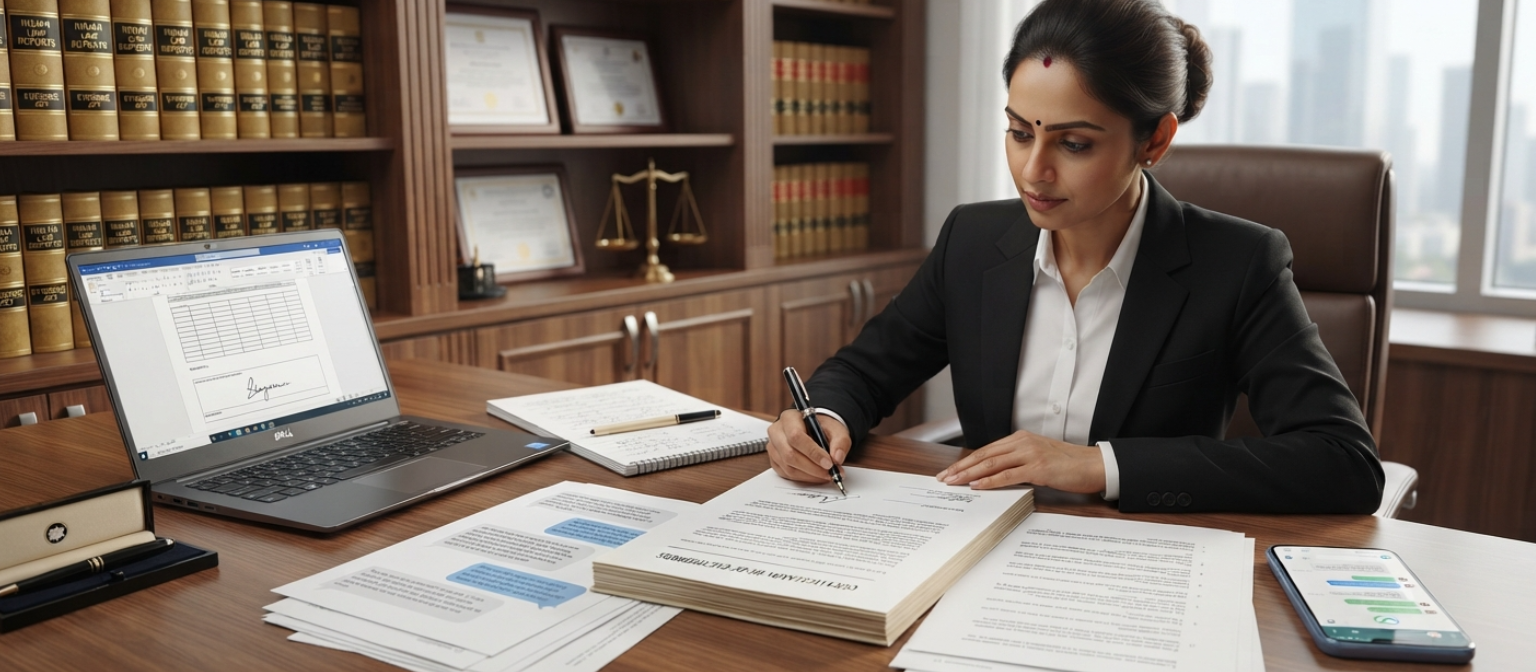
The requirement for certification of electronic evidence has an important history under Indian evidence law.
In Anvar P.V. v. P.K. Basheer, the Supreme Court held that electronic records produced as secondary evidence were subject to the certification requirement under Section 65B of the former Indian Evidence Act. This position was subsequently reaffirmed by the Supreme Court in Arjun Panditrao Khotkar v. Kailash Kushanrao Gorantyal, where the Court treated the certificate requirement under Section 65B (4) as mandatory in the circumstances governed by that provision.
The BSA has now replaced the earlier statutory framework, with Section 63 addressing admissibility of electronic records and prescribing certification requirements for relevant computer outputs. Therefore, legal practitioners should assess WhatsApp evidence under the current BSA framework, rather than mechanically relying on the terminology of the old Section 65B.
Can Deleted WhatsApp Messages Be Used as Evidence?
The fact that a message has been deleted from a WhatsApp conversation does not necessarily mean that no evidence can ever exist regarding that communication.
Electronic evidence may exist in different forms, depending on the circumstances. Relevant material could potentially include device records, backups, exports, other copies, linked devices or records obtained through appropriate legal processes.
However, attempting to recreate or recover a deleted conversation can raise questions concerning authenticity, integrity and the method used to obtain the material. The evidentiary value will ultimately depend on the facts and the applicable legal requirements.
Why Context Matters in WhatsApp Evidence
A WhatsApp message should not necessarily be viewed in isolation.
Suppose a person sends a message stating that a payment will be made. A single screenshot may not establish the complete nature of the transaction. The court may need to consider earlier and later messages, invoices, bank records, contracts, emails or other evidence.
The BSA itself recognises the importance of context when evidence forms part of a larger conversation or electronic record. Section 33 provides that evidence may be given of such portion of a conversation or electronic record as the court considers necessary for understanding the nature and effect of the statement and the circumstances in which it was made.
Can WhatsApp Messages Prove a Contract?
WhatsApp communications can potentially support a claim concerning an agreement, negotiation, admission or instruction. However, whether a contract was actually formed depends on the applicable law and the facts of the particular case.
A WhatsApp message should therefore not automatically be treated as proof that every legal requirement of a contract has been fulfilled.
The court may consider the complete communication, the identity of the parties, the intention expressed in the messages, subsequent conduct and supporting documents.
How Should WhatsApp Evidence Be Preserved?
If WhatsApp messages may become relevant to a legal dispute, preserving the evidence properly can be important.
A party should avoid unnecessarily altering, deleting or manipulating the original conversation. Where appropriate, the original device and relevant electronic records should be preserved. Screenshots, chat exports and other copies should be retained together with information about how and when they were obtained.
It is also advisable to seek legal guidance before relying heavily on digital communications in significant litigation because the appropriate method of preservation, certification and production can vary according to the circumstances.
The Supreme Court has previously issued directions concerning preservation and production of electronic evidence, including the importance of preservation and appropriate certification.
Frequently Asked Questions About WhatsApp Chats as Evidence
1. Are WhatsApp chats admissible in Indian courts?
Yes. WhatsApp chats can be electronic evidence. The Bharatiya Sakshya Adhiniyam, 2023 recognises electronic and digital records, subject to the statutory requirements governing their proof and admissibility.
2. Is a WhatsApp screenshot legally valid?
A screenshot may be relevant evidence, but its evidentiary value depends on factors including authenticity, source, integrity, context and compliance with applicable requirements for electronic records.
3. Do WhatsApp chats require a certificate?
Where the electronic record is being produced under the statutory provision governing computer outputs, Section 63 of the BSA provides for a certificate containing prescribed information. The exact requirement should be assessed based on how the electronic evidence is being produced.
4. Can WhatsApp chats be used in criminal cases?
Yes, WhatsApp communications may potentially form part of electronic evidence in criminal proceedings, provided they satisfy applicable requirements concerning relevance, admissibility and proof.
5. Can a WhatsApp message alone prove a case?
Not necessarily. A WhatsApp message may support a case, but courts can consider the message along with other evidence, its authenticity, context and the facts of the dispute.
What Should You Do If WhatsApp Chats Are Important to Your Case?
WhatsApp conversations can be valuable evidence, but their legal usefulness depends on much more than simply taking screenshots.
If WhatsApp messages are relevant to a dispute, it is important to preserve the available electronic evidence, maintain the original source where possible and obtain appropriate legal advice regarding authentication, certification and presentation before the court.
Semwal & Co advises individuals and businesses on legal issues involving electronic communications, digital records and disputes. As technology increasingly becomes part of everyday communication, understanding how electronic evidence is treated under Indian law can help parties protect and properly present relevant information when legal proceedings arise.
Disclaimer: This article is intended for general legal information and should not be treated as legal advice. The applicability of the law can vary depending on the facts and circumstances of each matter.