

Key Pointers of a Sale Deed
- Nature: A Sale Deed is a legally binding document transferring ownership of immovable property from Seller (Vendor) to Buyer (Purchaser).
- Conveyance of Title: Absolute transfer of right, title, interest, and possession.
- Consideration: Must clearly mention the sale consideration, mode of payment, and receipt thereof.
- Description of Property: Accurate and complete description (schedule, boundaries, CTS/Survey No., carpet/built-up area).
- Possession Clause: Specifies whether possession is vacant, peaceful, and physical, and the date of handover.
- Encumbrances: Seller declares the property is free from charges, liens, mortgages, litigation, etc.
- Indemnity Clause: Seller indemnifies Buyer against any future claims or defects in title.
- Representations & Warranties: Seller’s lawful ownership, authority to sell, compliance with laws.
- Execution & Registration: Must be executed and registered to be legally valid.
- Stamp Duty: Payable as per State Stamp Act (market value or consideration, whichever is higher).
Applicability of a Sale Deed

A Sale Deed is applicable in cases where:
- Final transfer of ownership of immovable property is intended.
- Sale of:
- - Residential flats
- - Independent houses
- - Land / plots
- - Commercial properties
- Used after Agreement for Sale conditions are fulfilled.
- Applicable only when:
- - Full or substantial consideration is paid
- - Seller has clear and marketable title
- Mandatory for:
- - Transactions exceeding ₹100 (as per Transfer of Property Act).
Requirements for a Valid Sale Deed
A. Legal Requirements
- Competent parties (major, sound mind, legal capacity).
- Seller must have clear and marketable title.
- Property must be transferable.
- Consideration must be lawful.
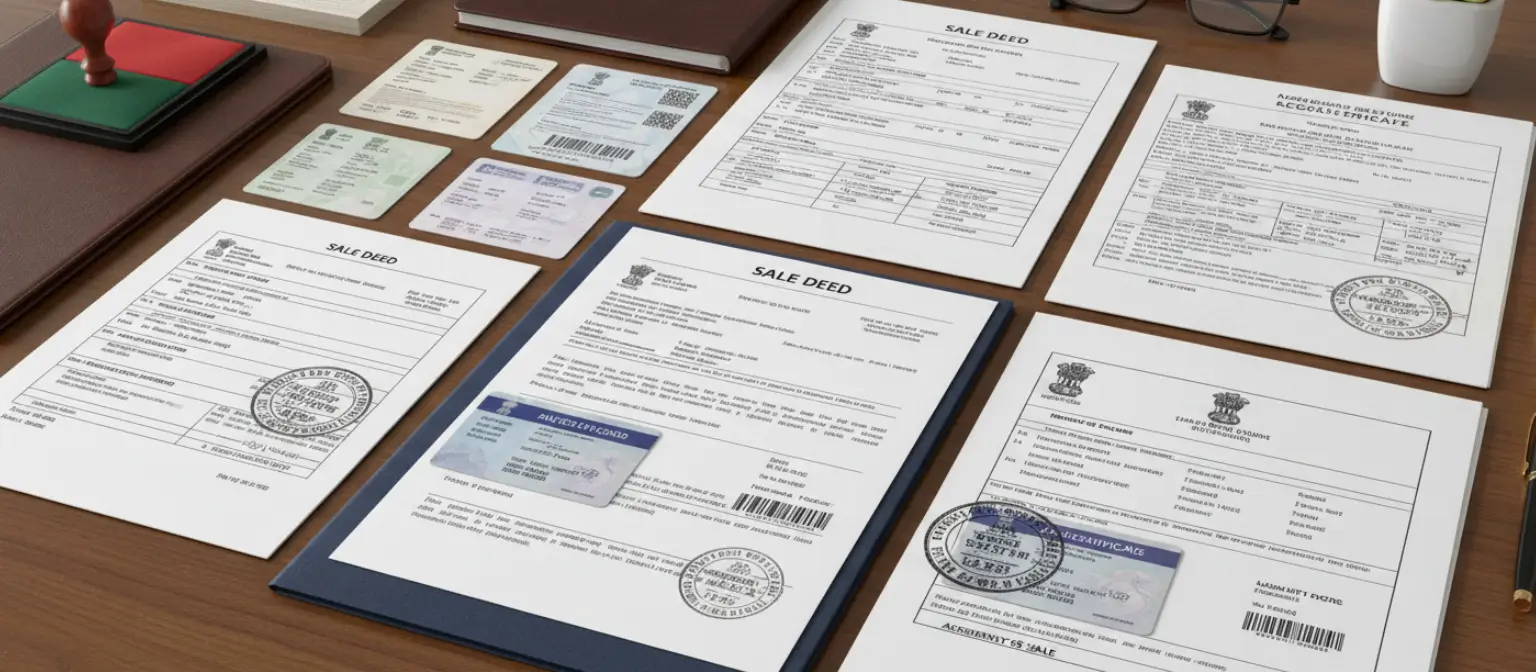
B. Documentationn
- Previous title deeds (chain of title).
- Agreement for Sale (if any).
- Property card / 7-12 extract / CTS extract.
- Occupancy Certificate / Completion Certificate (if applicable).
- Encumbrance Certificate.
- Society NOC / Share Certificate (for flats).
- Identity & address proofs of parties.
- PAN cards (mandatory).
- Power of Attorney (if executed through POA holder).
C. Registration & Stamp Dutyn
- Stamp duty paid as per State law.
- Registration before Sub-Registrar of Assurances.
- Execution in presence of two witnesses.
- Registration within prescribed time (generally 4 months from execution).