

Meaning : A Will is a revocable legal declaration by which a person determines how their property will be distributed after their death, and it requires no stamp duty or compulsory registration.
1. Key Details of a Will
- Nature: A Will is a legal declaration of intention by a person (Testator) regarding the distribution of their property after death.
- Operative After Death: It has no effect during the lifetime of the Testator.
- Revocable: Can be altered, revoked, or replaced at any time during the Testator’s lifetime.
- Testamentary Freedom: The Testator can dispose of self-acquired property freely.
- Nomination vs Will: Nomination does not override a Will.
- Executor: A person appointed to carry out the terms of the Will.
- Probate:
- Mandatory in certain cities (e.g., Mumbai, Chennai, Kolkata) for immovable property.
- Optional but advisable elsewhere.
- Registration: Not mandatory, but recommended to avoid disputes.
- Stamp Duty: No stamp duty payable on a Will.
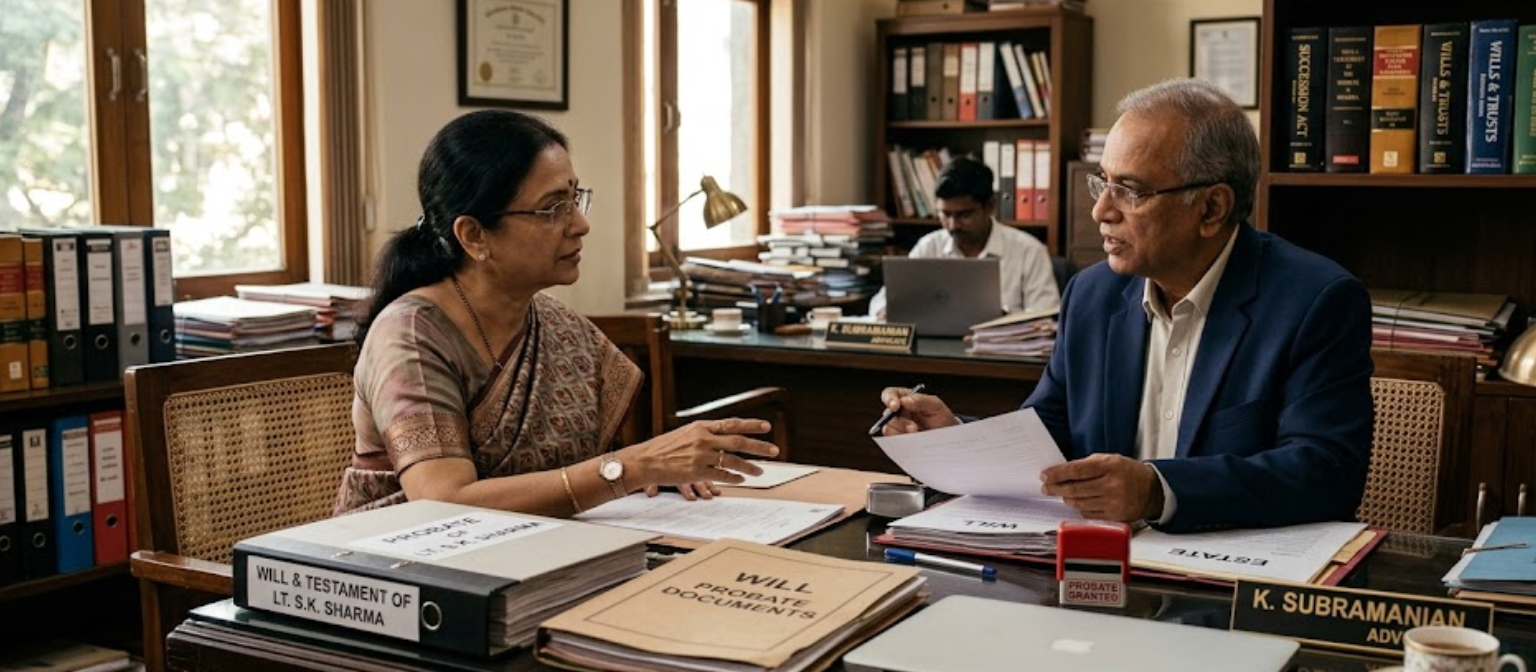
2. Applicability of a Will
A Will is applicable when:
- An individual wishes to decide succession of their assets.
- Applicable to:
- Immovable property (house, flat, land)
- Movable property (bank accounts, investments, jewellery)
- Useful in cases of:
- Second marriage / blended families
- Unequal distribution among heirs
- Appointment of guardians for minor children
- Applies to:
- Hindus, Muslims, Christians, Parsis (with religion-specific nuances)
- Takes precedence over intestate succession laws.
3. Requirements for a Valid Will
A. Legal Requirements
- Testator must be:
- Major (18+)
- Of sound mind
- Acting voluntarily, without coercion or undue influence
- Specific identification of beneficiaries and assets.
B. Execution & Attestation
- Must be signed by the Testator.
- Must be attested by at least two witnesses:
- Witnesses should not be beneficiaries.
- Witnesses must see the Testator sign (or acknowledge signature).

C. Drafting Essentials
- Full personal details of the Testator.
- Revocation clause (revoking all prior Wills).
- Asset-wise distribution.
- Appointment of Executor.
- Guardian clause (if minors involved).
- Residual clause (for assets not specifically mentioned).